15 NOVEMBER 2019 01:00
I was about 10 when I first experienced spinning honey. A gentleman called Mr. Jackson taught me and he had his own extractor which he had made electric by attaching an old washing machine engine to an old tea chest and to make it go faster you pushed them apart more so the belt didn’t slip. It was probably a bit dangerous but as you can imagine I thought it was great at 10 years old.
The bees put the nectar in the cells in a very liquid form (50-80 % moisture) Part of the honey making process involves changing the nectar to honey and this is about reducing the moisture content to less than 19%
Upshot of this process – it goes in liquid and comes out very thick and sticky. It’s quite difficult to get out. There are many methods to taking the honey out. You can either scrape it out, destroy the comb and sieve all the honey out, all of which are quite traditional but If you spin it out you can preserve the comb and use it again the following year. Doing it this way saves the bees energy for the following year so they don’t have to make the wax. If you do it correctly the wax should not get broken.
We then take a heated knife and slide it through the tiny air gap above the honey and below the capping’s but because the frame is always undulating it never really works out properly so you end up cutting a bit of honey with it. You spin the honey out of the capping’s and then wash the capping’s into water soaking all the honey off them. We then ferment the honey into mead. The capping’s which are then clean and dry are melted down and made into candles.
When the frames have been placed into the drum of the extractor and it starts spinning, honey is forced out of the cells that have got their caps removed by the knife. The honey will then empty into the drum walls and then run down to the bottom.
At the bottom of the drum there is a tap that is fixed, which if opened, allows our honey to flow out. The raw honey is coarse filtered and then put into our jars for you to enjoy.
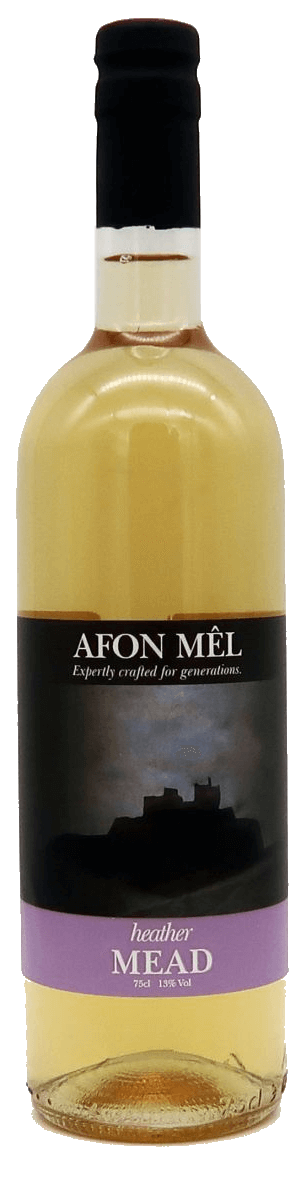
The Great Taste Golden Fork for the best food or drink from Wales was presented to our “really impressive” 13% ABV Heather Mead. “Smooth and easy to drink with lovely honey tones”, this mead is “crisp, balanced and rounded with an almost sherry-like dryness on the finish”, making it the ideal partner for cheese.